Silence Speaks

by Doug Stevenson

It was a good question – the kind that you want to think about. But before my mind could even begin to consider my answer, the speaker kept talking. She segued onto another topic and the question disappeared from my consciousness. An opportunity for connection was lost.

People don’t learn by listening. They learn by thinking about and processing what they see and hear. What implication does this concept have for us, as speakers and trainers?

One of the most powerful principles that I teach in The Story Theater Method is that “silence speaks.” During a silent moment between our words, the listener has time to process. They think thoughts and feel feelings. They are actively involved in the learning process. They make personal connections between what we’ve said and what it means to them. It is in this powerful moment, when the listener connects a new concept or idea with their own present need, that learning – and possibly transformation – takes place.

As a business presenter, you don’t use a story or other content delivery vehicle, “willy-nilly.” Everything that you say and do should be strategic. It is the same with the use of silence. You must determine in advance where in your presentation you are going to say something powerful, profound or stimulating. After you say it, pause and let it sink in. Let your audience speak. Give them time to talk to themselves.

We all talk to ourselves. It’s how we work things out. It’s how we learn. When your audience members talk to themselves, in response to something that you have said or done, an impression is made. I believe that true learning is the sum total of many impressions made over time. If you’ve taken the time to prepare your presentation and consider what you want to say, isn’t it essential that your listener “gets it?”

The speaker I mentioned earlier, that asked a powerful question, lost the opportunity to make an impression by not giving me silent space to consider my response. My mind had to race forward to keepup with her. In the end, I was overwhelmed with so many ideas - some of which weren’t even relevant to her topic – that I gave up. The one impression I was left with was that she wasn’t a very good speaker. Like too many others, she placed content above connection. She mistook talking fast for communicating.

In order for you to “let your audience speak” during your presentation, you need to become comfortable with the silence. You need to know that your audience member is not sitting there waiting for your next words. In fact, the less you say and the more they process, the better. This is a principle that speakers can learn from trainers. Trainers create time in their sessions for their students to work in silence. They put them in small groups and have them discuss things. Trainers know that the learner must participate in the learning process.

As a speaker or storyteller, silence is one of your most powerful allies. There are a number of ways to use silence. Here are a few suggestions. Unlike other experts, I will never suggest that you do something without telling you how, technically, to do it.

1. If you’ve been reading this newsletter for a while you are familiar with IN moments. In a story, an IN moment is a present tense re-enactment of a moment in time. It is an acting moment, rather than a past tense narration of what happened. Since an IN moment is generally a powerful moment in a story, it has the potential to be as much visual as vocal. In real life, we do a lot of thinking, acting and reacting. In these private behavior moments, there are no words.

This is how you might set-up an IN moment with the proper narration leading up to it:

“So there I was, standing at the train station, by myself, at 1 a.m., with no trains to Berlin until 6:30 AM, with one question rattling through my brain... what do I do now?”

By stepping IN at this point in the story and acting out, in silence, what it would look and feel like to be stranded in a train station at 1 a.m., your audience member has an opportunity to answer the question as if it was their question. They have a

“sympathetic experience” and participate in the story as if it was their story. In other words, they don’t just listen; they live the story through you. They are connected to their own thoughts and feelings. Depending on what it is you want to teach them with the story, you can either make the wrong decision and act improperly for the situation, thereby teaching them what NOT to do. Or you can make the correct decision, thereby teaching them what TO do!

This silent IN moment will only last ten seconds before you speak again, but it is a powerful ten seconds.

The silence is what hooks them. It gives them time to think. When the silent moment is over and you move forward with your next line, they move forward with you, hanging on every word. It’s no longer your story alone, it theirs as well. After your

presentation is done, they will transfer the lesson from your story to their life. This will only happen at a deep level if you give them time to think and feel. Let your audience speak.

2. Lets say you want to use silence in a keynote speech. Here’s how you do it:

You’ve just made a powerful or provocative statement. Hopefully you were standing still when you said it. Movement during powerful statements distracts from their power. After you make the statement, stand still for three seconds. Let the words hang in the air. Then, as if to gather your thoughts, turn and walk slowly to the right or left four or five steps. You may keep your eyes on the audience or bring them down into a private rumination. This movement fills another three to five seconds. Keep in mind, you must fill all silences with thought and/or emotion.

At the end of this silent space, you may want to repeat the statement. If you preceded the silence with a question, repeat the question. Another option is to take a quick audience poll. Provide them with three possible answers or reactions.

In the future, as you plan your content, design silence into the program. Remember, silence speaks!


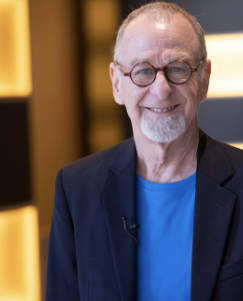
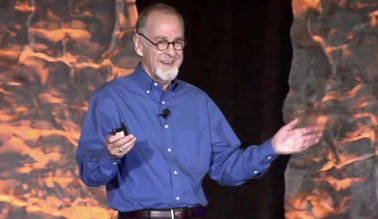
Doug Stevenson is the Guru of Storytelling in Business. He speaks, trains and consults worldwide to corporations and associations who want a competitive presentation edge through storytelling mastery and Emotional Eloquence leadership skills. He works with salespeople, leaders, professional speakers, trainers and fundraisers.

Doug is the author of Doug Stevenson’s "Story Theater Method", creator of Emotional Eloquence® and the author of a home study course on how to create a motivational speech titled: "How To Write and Deliver a Dynamite Speech – 21-Step Dynamite Speech System".


Learn more at www.storytelling-in-business.com or call 1-719-573-6195.

Copyrighted by Doug Stevenson. All Rights Reserved. Except as permitted under the United States Copyright Act of 1976, no part of this publication may be reproduced or distributed in any form or by any means, or stored in a database or retrieval system, without the prior written permission of the author.


About Us


Doug Stevenson is the Guru of storytelling in business and the founder and president of Story Theater International, a speaking, training and consulting company based in Colorado Springs, Colorado. His company trains thousands of professionals and executives each year, for clients that include Microsoft, Amgen, Bayer, Caterpillar, Oracle, Aetna Insurance, Hewlett Packard, Maytag, Super 8 Motels and others.

Read More...

Story Theater International
2504 Shalimar Drive
Colorado Springs, CO 80915

1-800-573-6196 or 1-719-573-6195