The Story Theater Method

by Doug Stevenson

For 10 seconds I was blind. As my vision returned, I could barely see past the first row because of the stage lights. It was full of people staring at me. I grabbed hold of the microphone stand, took a deep breath and began to tell my story. After seven long minutes it was over. My Hollywood stand up comedy debut was history. It had passed without a hint of laughter. As I walked towards the stage exit onto the parking lot, I passed autographed photos of Whoopie Goldberg, Robin Williams, Eddie Murphy and Ellen Degeneres. It was clear I was not going to join their ranks. Not unless I figured out what went wrong, or perhaps, didn’t go right. I knew I had a funny story, but that’s all I knew.

Ten years later I was giving a speech at a library in Colorado Springs when out of the blue I blurted out, “Do you want to hear a funny story?” Without any preparation or rehearsal, I launched into the same story, only this time with complete abandon. As the saying goes, I had them “rolling in the aisles.” People laughed so hard they cried. It was an amazing experience, a breakthrough. I had hit on something, but I had no clue know what it was.

Lou Heckler, a master storyteller says, “Don’t re-tell it, re-live it.” As I was driving home that night, trying to analyze what had just happened, all I could come up with was that I didn’t just tell it, I did it. I acted it out, playing all of the characters and doing all of the actions. The same story that bombed on the Sunset Strip in Hollywood was a hit in Colorado Springs.Storytelling is an art and the storyteller, the artist. All artists, however, need tools. The actor needs a stage, props and costumes. The musician needs her instrument. The artist needs his brushes and paint. And the storyteller needs form, content and presentation. Content alone is not enough. I found that out in Hollywood. Presentation alone is not enough. I found that out at the library because I had created a spontaneous moment that could not be replicated. For a story to come alive and captivate an audience, the content must be crafted in a calculated manner. The story itself is only a beginning. It must be worked and re-worked, formed and re-formed. Comedians do this all the time. They write, practice, perform and re-write. Once they find the perfect combination, they lock it in. I once heard a story about how Rodney Dangerfield was obsessed with finding just the right inflection for a specific word. It is the same with a great story.

Let’s take one of your stories and make it better. I’ll assume you want it to be funny, powerful and to make an important point. Begin by writing it down word for word. That’s right. You’re an author first and a performer second. The actor is nothing without a script and the speaker is nothing without one either. You need to do this for a number of reasons. The best reason is to make you choose your words carefully. Some words will tell your story better than others. Also, you will find that by writing your story, you remember details that had been forgotten. Have fun with this process. The magic of story is in the details. You are painting a picture with words. As you write, use an artists brush, not a roller. The more vivid the details, the more visual the imagery.

Let’s start out with a classical story structure template. Good stories have a progression; they go from point A to point B. Try writing your story using this template. If your story lacks any of the elements from the template, go ahead and add them as you write.

  • Set the scene – create context
  • Describe the time and place. Help the audience feel the environment or era.
  • Think in terms of sensory as well as logistical elements. • Introduce the characters
  • Give each person in your story physicality, personality or a quirk. We should
  • be able to relate them to someone we know. • Begin the journey
  • Describe the situation or task. Set up the goal. Where do you want to go?
  • What is point A and what will be point B? • Encounter the obstacle
  • Who or what gets in the way of reaching your goal. Is it an internal or external obstacle? Whatever it is, relate it to a universal emotion so that the audience feels the struggle and relates to the pain, frustration or embarrassment.
  • Overcome the obstacle What happens? How do you overcome? Be graphic. Put us there with you. Let us see you confront it and win.
  • Resolve the story Let us know how things work out.
  • Make the point – the lesson learned Teach us a lesson. Be eloquent. Make it a universal truth, a basic life lesson that is worthy of the story. The story may be epic, but the point must be simple and motivate us to move to the next level. It must call us to a higher standard and challenge us to be better and do better. Example “When I took a risk and confronted my fear, my self-esteem soared.”
  • Ask “the question” The question makes your audience think about the story’s application in their life. Take your point and turn it into a question that they must ask themselves.

Example: “Is it time for you to take a risk so that your self-esteem can take flight?”

Once you have written the entire story, you have a rough draft from which to begin. Remember that the story is only the beginning. Now you can see what you’ve got and begin to craft it. The process of crafting takes place when you go back and look for places to embellish. Don’t be afraid to fudge the facts. You’re telling a story, not giving a history lesson. If your story took place in a pizza parlor in New Jersey, but it’s more dramatic in Manhattan, move it. If the cab driver was American, but it would be funnier if he was Haitian, go ahead and make him Haitian.

If you’re looking to add humor to your story, simply exaggerate. Blow things all out of proportion to reality and make the situation worse than it really was. Instead of just falling down, fall down in a puddle, of maple syrup, that is still warm, and full of dead ants!

Once you’ve crafted your story, it’s ready to be worked on for performance. Remember what Lou said: you’re not going to re-tell it, you’re going to re-live it. Rehearse on your feet. Get up out of your chair and walk through the story. Think of yourself on stage in a theater and choreograph your movement. Certain things will happen in certain places. Different characters will move and sound differently. At crucial moments you will pause and feel the emotion appropriate to the moment. You won’t just say you were tired, your whole body will portray tired. You’ll laugh when you laughed and scream when you screamed. During certain moments you will be “IN” the moment and not relating to the audience at all. Don’t worry, they’re with you.

In order to have an end result that is amazing, you will have to spend many hours working on your story. The great storytellers distinguish themselves not just by their talent, but by their dedication to their craft. They think about their stories constantly. They work on a gesture or movement until it is just right. They rehearse it over and over until it becomes second nature, and the line and the gesture are effortlessly married together.

The problem most speakers have with their stories is that they’ve developed them helter- skelter over time without ever really working on them. The stories work okay, so why bother to sit down and polish them? They’re good enough. But what do you do when you’re no longer satisfied with good enough? Where do you go to get better?

As a young man I studied acting with various teachers. I performed in plays and musicals in everything from Snoopy to Shakespeare to GREASE. I spent hundreds of hours rehearsing, memorizing and polishing. Over the years I perfected the acting and comedy skills that I now share with others who want to be better speakers, storytellers and presenters. It is an amazing body of knowledge.

Most of the speakers I coach never learned how to do the things that as an actor, I do instinctively - but they want to learn. That’s why I developed the Story Theater retreats, seminars, and audio learning systems like the Story Theater Six Pack and How to Write and Deliver A Dynamite Speech. These resources provide the answers to questions that speakers most frequently ask.

Are you ready to do this work? Are you ready to have stories that are so good that people request them again and again – and pay thousands of dollars to hear them? You already have the stories. They’re waiting for you to give them the time they deserve to make

them great. Remember that storytelling is an art and the storyteller the artist. Think of that block of marble that Michaelangelo chipped away at. He said that he was just releasing the sculpture hidden inside. There’s a work of art hidden in your stories waiting for the artist in you to get busy. Give your audiences what they really want – Story Theater.


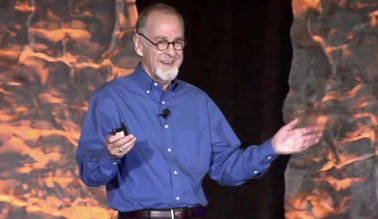
Doug Stevenson is the Guru of Storytelling in Business. He speaks, trains and consults worldwide to corporations and associations who want a competitive presentation edge through storytelling mastery and Emotional Eloquence leadership skills. He works with salespeople, leaders, professional speakers, trainers and fundraisers.

Doug is the author of Doug Stevenson’s "Story Theater Method", creator of Emotional Eloquence® and the author of a home study course on how to create a motivational speech titled: "How To Write and Deliver a Dynamite Speech – 21-Step Dynamite Speech System".


Learn more at www.storytelling-in-business.com or call 1-719-573-6195.

Copyrighted by Doug Stevenson. All Rights Reserved. Except as permitted under the United States Copyright Act of 1976, no part of this publication may be reproduced or distributed in any form or by any means, or stored in a database or retrieval system, without the prior written permission of the author.


About Us


Doug Stevenson is the Guru of storytelling in business and the founder and president of Story Theater International, a speaking, training and consulting company based in Colorado Springs, Colorado. His company trains thousands of professionals and executives each year, for clients that include Microsoft, Amgen, Bayer, Caterpillar, Oracle, Aetna Insurance, Hewlett Packard, Maytag, Super 8 Motels and others.

Read More...

Story Theater International
2504 Shalimar Drive
Colorado Springs, CO 80915

1-800-573-6196 or 1-719-573-6195